Richard Williams
Department of Sociology
University of Notre Dame
|
|||
 |
How to Reach Me Addresses and Phone Numbers |
||
|
Biography Educational Background, Teaching and Research Interests |
||
|
Stata
Happy Hour with Dr. Richard Williams On Sept 3, 2020, Chuck Huber from StataCorp interviewed Richard Williams about his life and work. |
||
|
Address to the Notre Dame Sociology Class of 2014 | ||
|
Barack
Obama's visit to Notre Dame Barack Obama's commencement address at Notre Dame in May 2009 gave Richard Williams a brief opportunity to serve as a media commentator. |
||
|
Faculty/Staff
Support for the LGBTQ Community at Notre Dame In 2012 almost 400 Notre Dame faculty and staff signed a letter in support of the Lesbian, Gay, Bisexual, Transgender and Questioning members of the Notre Dame community. The letter, the list of supporters, a statement on the Catholic justification for the letter, and other material are available on the web page. |
||
|
The Mannix/Williams Family | ||
|
Photo Album: The Early
Years
(Pictures from when the kids were little) |
|||
|
A Soldier's Surprise for
the Holidays
(The 1971 Williams' family Christmas - Omaha World Herald,
Dec. 24, 2002) |
|||
|
Bobby Williams, aka Double B -
Stories about Bobby and examples of his award-winning work |
|||
|
Bethy Williams -
Stories about Bethy |
|||
|
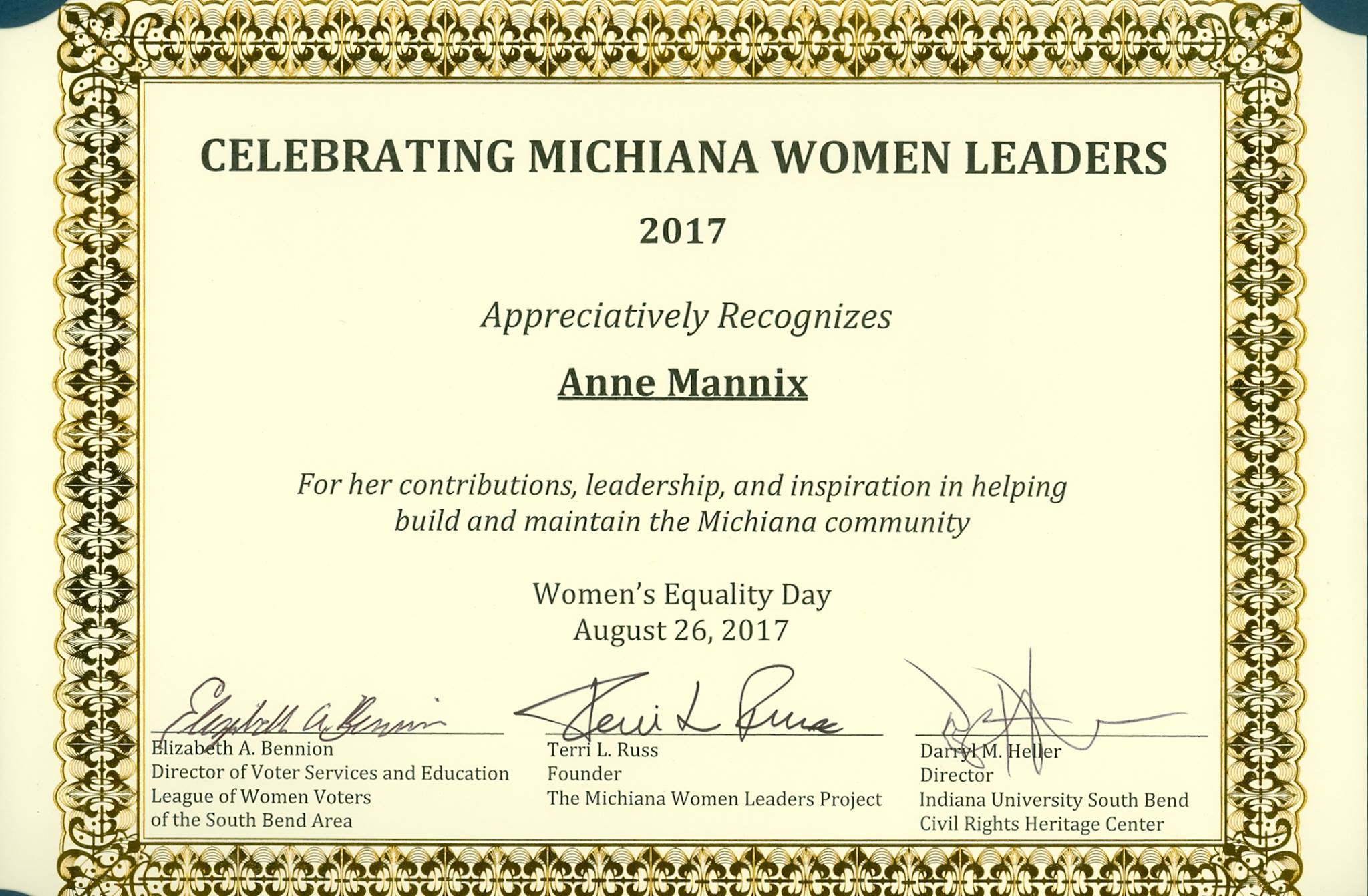
Anne Mannix, the proud mother of Bobby and Bethy, has some nice
accomplishments herself |
|||
|
|||
|
Soc 20033 (In Progress, Spring 2024) Introduction to Social Problems |
|
Soc
30902 [In Progress, Spring 2024] Undergraduate Research Methods |
|
Soc 43402
[Fall 2023] Population Dynamics |
|
Soc
73994 (Spring 2022) Categorical Data Analysis |
|
Soc 63992
(Fall 2004) |
|
Soc 63993
(Spring 2015) (The old version of) Graduate Statistics II |
|
Soc 513
(Spring 1996) |
|
Soc 530
(Spring 1992) Intermediate Social Psychology |
|
Taiwan 2018 (Summer 2018) |
|
Tips for using Zoom in the classroom |
|
Stats I, Stats II, Stats III, and Stata Highlights. These are actually alternate versions of my Graduate Statistics I, II, and Categorical Data Analysis pages. Unlike the regular course pages, the URLs for these pages are fairly stable (for at least a year) for anyone who wants to link to them. The highlights page singles out those notes that are of special interest to those who want to learn about Stata. SPECIAL BONUS: If you want a blast from the past, here is the original 1984 Stata Reference Manual. |
||
|
|||
|
|
Comparing Logit & Probit Coefficients Between Nested Models [Working Paper]. Social scientists are often interested in seeing how the estimated effects of variables change once other variables are controlled for. For example, a simple analysis may reveal that income differs by race - but why does it differ? To answer such a question, a researcher might estimate a model where race is the only independent variable, and then add variables such as education to subsequent models. If the original estimated effect of race declines, this may be because race affects education, which in turn affects income. What is not universally realized is that the interpretation of such nested models can be problematic when logit or probit techniques are employed with binary dependent variables. Naive comparisons of coefficients between models can indicate differences where none exist, hide differences that do exist, and even show differences in the opposite direction of what actually exists. We discuss why problems occur and illustrate their potential consequences. Proposed solutions, such as Linear Probability Models, Y-standardization, the Karlson/ Holm/ Breen method, and marginal effects, are explained and evaluated. [Revised paper is forthcoming in Social Science Research.] | ||
|
|
Sage Research Methods Foundations. Co-edited by Richard Williams, the recently released 10 volume, 3.5 million word SRMF provides a reference resource for all levels, from undergraduates learning the concepts of research, to novice postgraduate students honing their skills, and scholars and practitioners exploring cutting‐edge developments and specialist techniques. Sage aims for this to be the go‐to research methods resource for educating and training new generations of students and scholars. Both print and online versions are available. Notre Dame and several other universities provide free online access for the members of their academic communities. Entries written or co-written by Williams and his past and present graduate students include Ordinal Regression Models, Ordinal Independent Variables, Effect Size, Marginal Effects and Adjusted Predictions, Rank-Ordered Logistical Models, Goodness-of-Fit Measures, and a biographical entry on methods pioneer Guillermina Jasso. |
||
|
|
Dynamic Panel Data Modeling using Maximum Likelihood. Paul Allison, Enrique Moral-Benito, and Richard Williams have collaborated on a project entitled "Dynamic Panel Data Modeling using Maximum Likelihood." Panel/longitudinal data have many advantages when trying to make causal inferences but can also be difficult to work with. We show that ML provides an alternative to widely used GMM methods such as Arellano-Bond and is superior in many cases. We have prepared a Stata program called xtdpdml that greatly simplifies the process of estimating our models. The web page lists the materials are currently available. |
||
|
|
Marginal Effects and Adjusted Predictions. The results from binomial and ordinal models can often be difficult to interpret. All too often, researchers discuss the sign and statistical significance of results but say little about their substantive significance. In his award-winning Using the margins command to estimate and interpret adjusted predictions and marginal effects, Williams shows how the substantive and practical significance of findings can be made much clearer. An alternative presentation of key ideas is made by Stoltz and Williams in Sage Research Methods Foundations. Bornmann and Williams present an application of the methods in How to calculate the practical significance of citation impact differences? There are several additional handouts on adjusted predictions and marginal effects available at https://www3.nd.edu/~rwilliam/stats3/index.html. | ||
|
|
Ordinal Generalized Linear Models. oglm is a Stata program written by Richard Williams. oglm estimates Ordinal Generalized Linear Models. When these models include equations for heteroskedasticity they are also known as heterogeneous choice/ location-scale / heteroskedastic ordinal regression models. oglm supports multiple link functions, including logit, probit, complementary log-log, log-log and cauchit. When an ordinal regression model incorrectly assumes that error variances are the same for all cases, the standard errors are wrong and (unlike OLS regression) the parameter estimates are biased. Heterogeneous choice/ location-scale models explicitly specify the determinants of heteroskedasticity in an attempt to correct for it. Further, these models can be used when the variance/variability of underlying attitudes is itself of substantive interest. This working paper (revised March 2009; a final version is in the May 2009 Sociological Methods and Research), "Using Heterogeneous Choice Models To Compare Logit and Probit Coefficients Across Groups," shows an application of the oglm program, while "Fitting heterogeneous choice models with oglm" provides several practical examples of how to estimate and interpret such models. | ||
|
|
Generalized logistic regression/ partial proportional odds models for ordinal dependent variables. These papers and handouts illustrate the theory and use of generalized logistic regression models for ordinal dependent variables. Such models can be tested with gologit2, a Stata 8 program written by Richard Williams. A major strength of gologit2 is that it can estimate models that are less restrictive than the proportional odds /parallel lines models estimated by ologit (whose assumptions are often violated) but more parsimonious and interpretable than those estimated by a non-ordinal method, such as multinomial logistic regression (i.e. mlogit). gologit2 actually supports multiple link functions, including logit, probit, complementary log-log, log-log and cauchit. If you are already familiar with gologit2 but are having trouble getting it to work right, you may want to check out the troubleshooting page. | ||
|
|
One Stroke of the Pen is a November 2009 briefing paper prepared for the Council on Contemporary Families. It discusses John F. Kennedy's executive order 11063 that was supposed to end racial discrimination in housing, and the struggle that has followed since then. It cautions that "It would be tragic if the economic problems caused by irresponsible lending practices caused us to abandon efforts to end discrimination against minorities and to increase residential security for all Americans." Here is Notre Dame's press release on the paper (Note: the link it gives for the report is now outdated.) A more extensive discussion of the topic appears in this November 2009 talk that was given to The Notre Dame Alumni Club of South Dakota. | ||
|
|
Residential Segregation and the Transformation of Home Mortgage Lending, by Carolyn Bond & Richard Williams. (December 2007 Social Forces.) After decades of inequality, the 1990s saw sudden and dramatic increases in lending to low income and minority groups. This paper examines the impact this lending had on residential segregation. It contends that the nature of lending was even more important than the amount: some lenders and types of lending had much more impact on residential segregation than did others. The Washington Post discusses highlights from this research in Subprime Mortgages and Race: A Bit of Good News May Be Illusory. |
||
|
|
Alternative Assessments of GSE Performance, Influence and Impact. The May 2006 final report for this HUD funded study is now available. This report examines the impact that the Government Sponsored Enterprises (Fannie Mae and Freddie Mac) had on nationwide home mortgage lending to underserved markets during the years 1993-2003. Previous studies have concluded that the GSEs were not leading the market. The ultimate conclusion of this study is the same. But, by virtually every criterion examined, it is also clear that in recent years the GSEs have made noteworthy progress. | ||
|
The Changing Face of Inequality in Home Mortgage Lending (Revised January 2005; final version published in Social Problems, May 2005.) This paper discusses the growth of subprime and manufactured housing lending during the 1990s and the impact this has had on inequality in the United States, both in home mortgage lending and in other areas. The online bibliography includes links to many of the sources used in the paper. |
||
|
|
Are the GSEs Leading, and If So Do They Have Any
Followers? An Analysis of the GSEs - Impact on Home Purchase Lending to
Underserved Markets During the 1990s. The November 2002 final report for this HUD funded study is now available. This report examines the impact that the Government Sponsored Enterprises (Fannie Mae and Freddie Mac) had on nationwide home mortgage lending to underserved markets during the years 1993-2000. |
||
|
The Effect of GSEs, CRA, and Institutional Characteristics on Home Mortgage Lending to Underserved Markets. The final report for this 1999 HUD funded study is now available. Also available is an updated analysis that extends the work through 1999. |
||
|
Journal of Urban Affairs, 1997. Racial, Economic and Institutional Differences in Home Mortgage Loans: St. Joseph County, Indiana |
||

You can send email to Richard Williams at Richard.A.Williams.5@ND.Edu