Contact Info

611 Flanner Hall
Department of Anthropology
University of Notre
Dame Notre Dame, IN 46556

(574) 631-7638

FAX: (574) 631-5760

Send Email

Mark R. Schurr

Associate Professor

Department of Anthropology
University of Notre Dame

Vita (in PDF format)


Anthro Dept Home Page

Notre Dame Home Page

My research interests take me into the field and the lab.

Field Work:

            My field work has been conducted mainly in northern Indiana since 1991 when I taught my first field school at Notre Dame. Current research topics include:

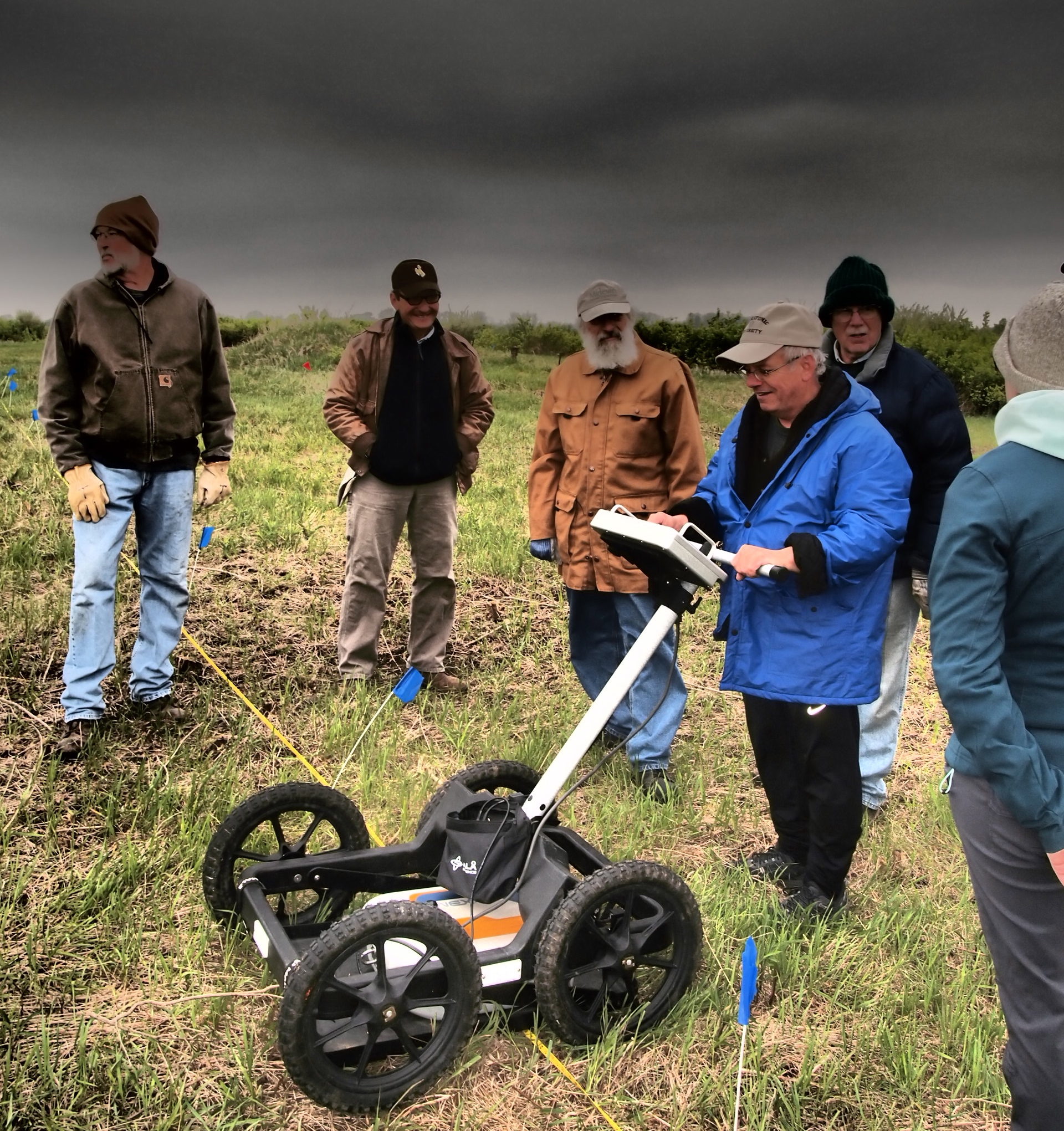
•  Applications of remote sensing (also known as archaeological prospection).   Most recently, I have been experimenting with ground penetrating radar (GPR) at the Collier Lodge site (more below).

•  The Removal Project, the historical archaeology of the period between AD 1795 to 1840 when Native Americans were being forced out of the region along the southern shores of Lake Michigan.   The primary goal of this project is to understand the diverse strategies that Native Americans used to resist or adapt to removal.

In 2012, I plan to start a new field project at the Bailly Homestead in the beautiful and historic Indiana Dunes National Lakeshore. I'm looking forward to working with my colleagues Josh Wells (Indiana University - South Bend) and Jay Sturdevant (Midwest Archaeological Center, National Park Service) at this National Register site. It will be exciting to work with the staff of the Lakeshore, students from Notre Dame and Indiana University - South Bend, and volunteers.

The Notre Dame Archaeology Field School will work at the Bailly Homestead in June of 2012. This is a great chance to get experience in geophysical surveys and excavation. Design your own field experiment!

Please visit the ND Archaeology Field School page or download a poster.

•  For nine years, the Collier Lodge project conducted field investigations of the rich and complex archaeological record of the Collier Lodge site in northwestern Indiana, a remarkable location where an area of just a few acres was used for at least 9,000 years. The 2011 season was the final year of a public archaeology project that brought together professionals, students, and volunteers from the Kankakee Valley Historical Society. While I really enjoyed working with so many great people over the years, it is time to move on. My involvement in the field portion of the project is finished and we are now entering the phase of laboratory studies. I am sure many student research projects will be forthcoming in the future. The next one will be Drew Webster's senior thesis on the flatware from the site.


Laboratory Research:

           My lab work makes use of my background in chemistry (I have a B.S. in Chemistry and worked in the chemical industry for several years before going to grad school).   My enduring love of chemistry was originally sparked by a childhood chemistry set, and further nurtured by an excellent high school teacher. I am interested in applying analytical methods to archaeological problems.   This is often called archaeometry.   Methods that I am presently using include:

•  Stable isotopes for understanding prehistoric nutrition, especially to examine changes in weaning behavior (or lack thereof) with the evolution of food production, and the relationship between agricultural intensification and social organization (please see vita, on left). I have recently become very interested in the isotopic ecology of people and the animals they preyed upon or coexisted with. Many of these projects are being done by students.

•  Fluoride dating of bones, with many projects conducted by the Fluoride Dating Service Center.