Contact Info

611 Flanner Hall
Department of Anthropology
University of Notre
Dame Notre Dame, IN 46556

(574) 631-7638

FAX: (574) 631-5760

Send Email

Mark R. Schurr

Associate Professor

Department of Anthropology
University of Notre Dame

Vita (in PDF format)


Anthro Dept Home Page

Notre Dame Home Page

My research interests take me into the field and the lab.

Field Work:

            My field work has been conducted mainly in northern Indiana since 1991 when I taught my first field school at Notre Dame. Current research topics include:

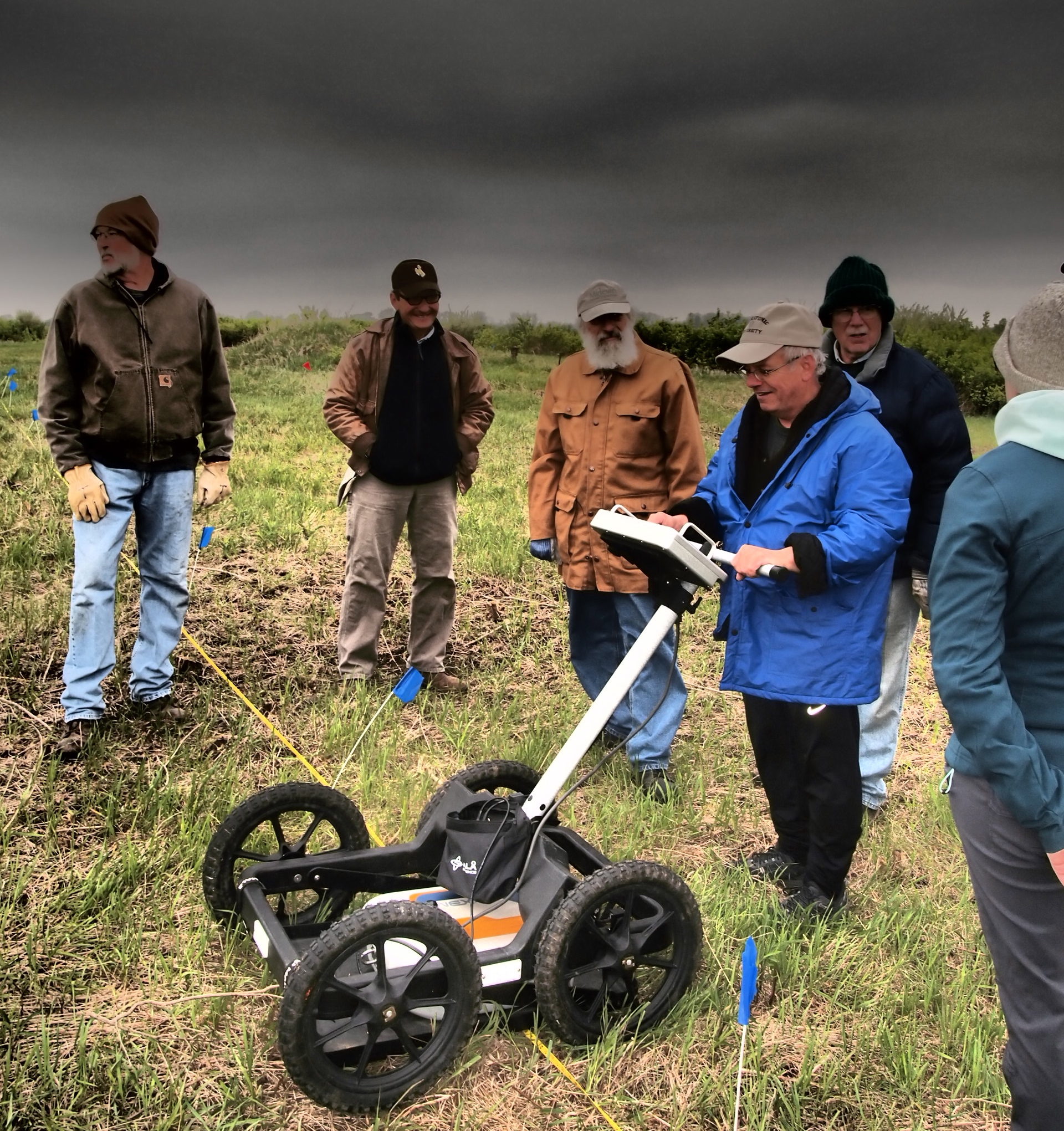
•  Applications of remote sensing (also known as archaeological prospection ).   Most recently, I have worked in Ireland with my friend and colleague Ian Kuijt on the Western Ireland Landscape Project, conducting ground penetrating radar (GPR) surveys on Omey Island in western Ireland, and I have also been giving annual demonstrations at the Mound House site in the lower Illinois Valley.

•  The Removal Project, the historical archaeology of the period between AD 1795 to 1840 when Native Americans were being forced out of the region along the southern shores of Lake Michigan.   The primary goal of this project is to understand the diverse strategies that Native Americans used to resist or adapt to removal.

•  The Collier Lodge project has been investigating the rich and complex archaeological record of the Collier Lodge site in northwestern Indiana, a remarkable location where an area of just a few acres was used for at least 9,000 years. The project is a public archaeology project that brings together professionals, students, and volunteers from the Kankakee Valley Historical Society.


Laboratory Research:

           My lab work makes use of my background in chemistry (I have a B.S. in Chemistry and worked in the chemical industry for several years before going to grad school).   My enduring love of chemistry was originally sparked by a childhood chemistry set, and further nurtured in by an excellent high school teacher. I am interested in applying analytical methods to archaeological problems.   This is often called archaeometry.   Methods that I am presently using include:

•  Stable isotopes for understanding prehistoric nutrition, especially to examine changes in weaning behavior (or lack thereof) with the evolution of food production, and the relationship between agricultural intensification and social organization (please see vita, on left).

•  Fluoride dating of bones, with many projects conducted by the Fluoride Dating Service Center.

•  The applications of Electron Spin Resonance (ESR) for determining the thermal history of charred or burned prehistoric materials.   Bob Hayes (Emeritus Professor of Chemistry and Biochemistry) and I just recenlty completed a multi-year project exploring whether ESR data can be used to reconstruct the original isotope ratios of cremated burials and burned animal bones. Publications on this topic are listed in my vita and others are in press or under review.