Nancy Reeves Dreux Professor of Political Science, Emerita
Editor-in-Chief of The Review of Politics from 2004-2018
Visiting Professor, ASU’s School of Civic & Economic Thought and Leadership 2019 to present.
B.A. Cornell University
Ph.D. University of Chicago
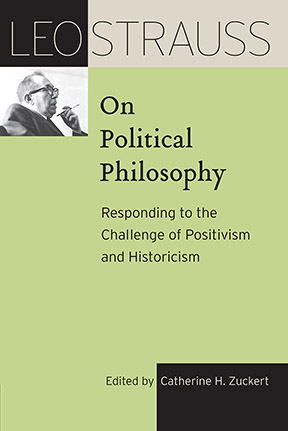
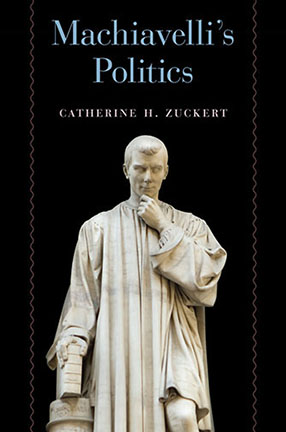
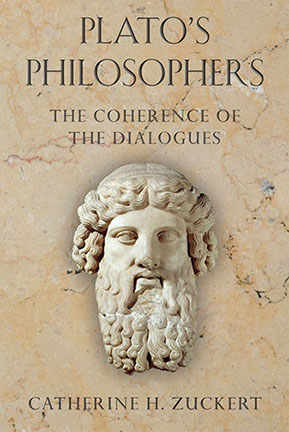
Zuckert’s book, Natural Right and the American Imagination: Political Philosophy in Novel Form, won the Professional and Scholarly Publishing Award for the best book written in philosophy and religion by the American Association of Publishers in 1990. Understanding the Political Spirit: From Socrates to Nietzsche, edited by Zuckert, received a Choice award as one of the best books published in political theory in 1989. Her book on Plato’s Philosophers: The Coherence of the Dialogues (University of Chicago Press, 2009) won the R.R. Hawkins award from the Association of American Publishers for the best scholarly book published that year. She co-authored The Truth about Leo Strauss (2006) and Leo Strauss and the Problem of Political Philosophy (2014) with Michael P. Zuckert (both published by the University of Chicago Press), and edited Political Philosophy in the 20th Century: Authors and Arguments (Cambridge University Press, 2011) as well as Leo Strauss on Political Philosophy (University of Chicago Press, 2018). Her most recent monograph is Machiavelli’s Politics (University of Chicago Press, 2017) was selected by the Washington Examiner as a book of the decade.
Zuckert has received several grants from the National Endowment for the Humanities, as well as the Bradley and Earhart Foundations.
She is a member of Phi Beta Kappa, has been listed in several editions of Who’s Who in America, and was selected as a member of the Templeton Honor Role in 1998.
Featured Publications